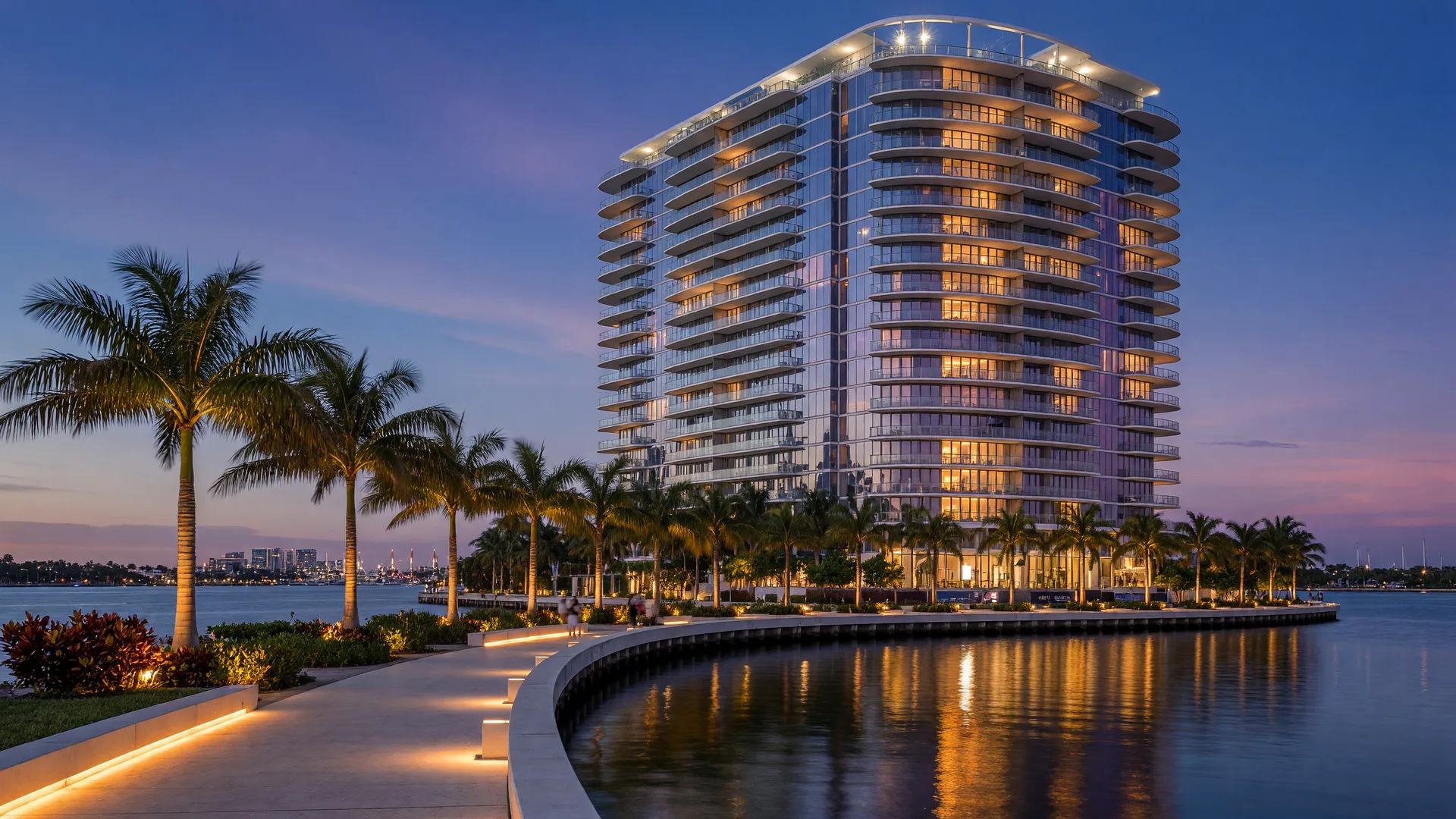
The Waldorf Astoria Residences Miami is the tower that rewrites Miami's skyline: 100 stories and 1,049 feet at 300 Biscayne Boulevard in Downtown Miami, developed by PMG and Greybrook Realty Partners with architecture by Carlos Ott in collaboration with Sieger Suarez. When complete it will be Florida's first supertall and the tallest residential building in the state.
Prices: starting at $1M+
Entry-level residences start around $1.1 million, with mid-floor one and two-bedroom homes running from roughly $1.8 million to $4 million and upper-floor three and four-bedroom residences and penthouses climbing from $4 million into the tens of millions. Pricing varies by floor, exposure, and view, and the building's higher floors carry a premium that reflects the scarcity of the address.
Floor plans and finishes
The tower holds 360 branded residences above a Waldorf Astoria hotel, with layouts from one to four bedrooms. The defining details are the private elevator entries, ten-foot floor-to-ceiling windows, Wolf and Sub-Zero kitchen packages, and smart-building technology. Residences begin well above the hotel floors, so the building's lower levels are hotel, amenities, and services.
Delivery timeline
Delivery is estimated for 2029. As with any supertall, the timeline is a long one, and buyers should plan financing that can wait and a current home that can flex. Deposit structures are paid in installments across construction milestones, and the exact schedule is negotiated in the purchase agreement.
Amenities
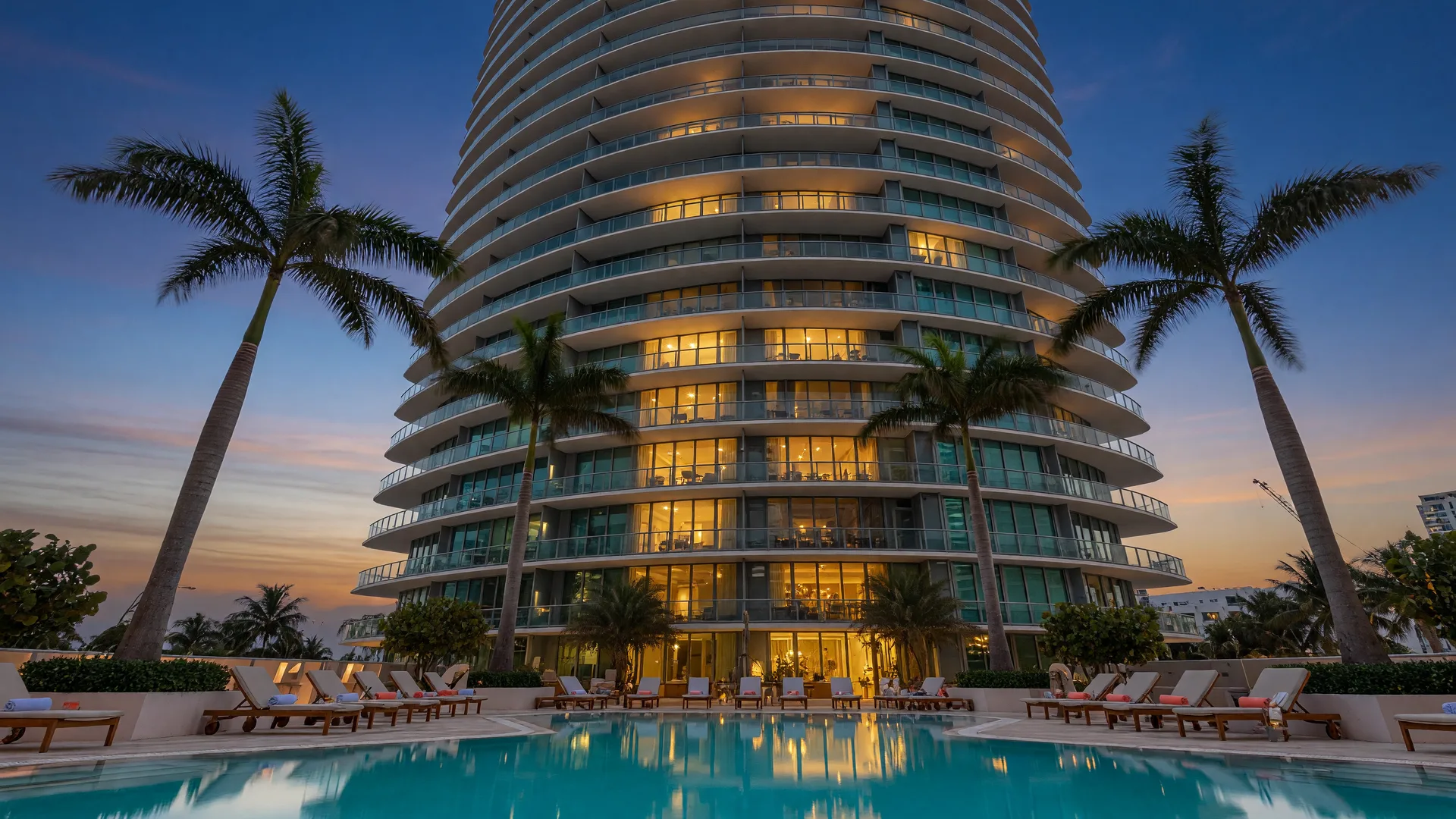
The amenity program is built around the Waldorf Astoria brand: a resort-style pool deck with cabanas and an outdoor café, a full-service spa, a signature restaurant, a private bar and wine room, an owners' lounge, a kids' club, meeting and boardrooms, and 24-hour concierge, doorman, and security. Buyers are buying a hotel service culture as much as a residence.
Investment analysis
The investment case rests on three things: Downtown Miami's momentum, the scarcity of supertall addresses, and the brand premium that Waldorf Astoria residences have commanded in other markets. The counterweights are the long timeline, the deposit risk over several years, and the fact that the resale market for this building is unproven until the first closings. Buyers who treat it as a long-term hold with a defined budget tend to be the most comfortable.
What to know before you buy
Compare the building against the resale market today: what a similar view and size costs in an existing Downtown tower. Review the developer's delivered projects and on-time record. And have an advisor negotiate the contract terms that protect you, including deposit structure, cancellation rights, and assignment provisions. The tower is a landmark, but the contract is still a developer document.
Written by Kelby Contreras, Florida Luxury Real Estate.
Start a conversation